_edited.png)
The Lost-Wax Bronze Casting Process: From Sketch to Installation

Updated: 2 days ago
Most people encounter a finished bronze sculpture and never think about the months of craftsmanship hidden beneath its surface.
What appears to be a simple creation process is actually the result of a meticulous journey. This journey involves artistic vision, sculpting, mold making, casting, metalwork, and finishing. Every bronze sculpture begins long before molten metal ever enters a mold.
As a contemporary bronze sculptor based in Dallas, Texas, I often receive questions about how bronze sculptures are made. The answer involves one of the oldest and most respected artistic techniques in history: lost-wax casting. Here’s a look at the journey from the first idea to the final installation.

Understanding the Lost-Wax Bronze Casting Process
Step 1: Concept Development and Sketching

Every sculpture begins with an idea.
Sometimes inspiration comes from a personal story, an emotional experience, nature, human relationships, or a commissioned project. During this stage, initial sketches help explore movement, composition, proportion, and symbolism.
For commissioned sculptures, this phase often includes conversations with collectors, architects, or institutions. Understanding the vision and intended setting for the piece is crucial. The goal is not simply to create an object but to create a meaningful experience through form.
Step 2: Sculpting the Original Model
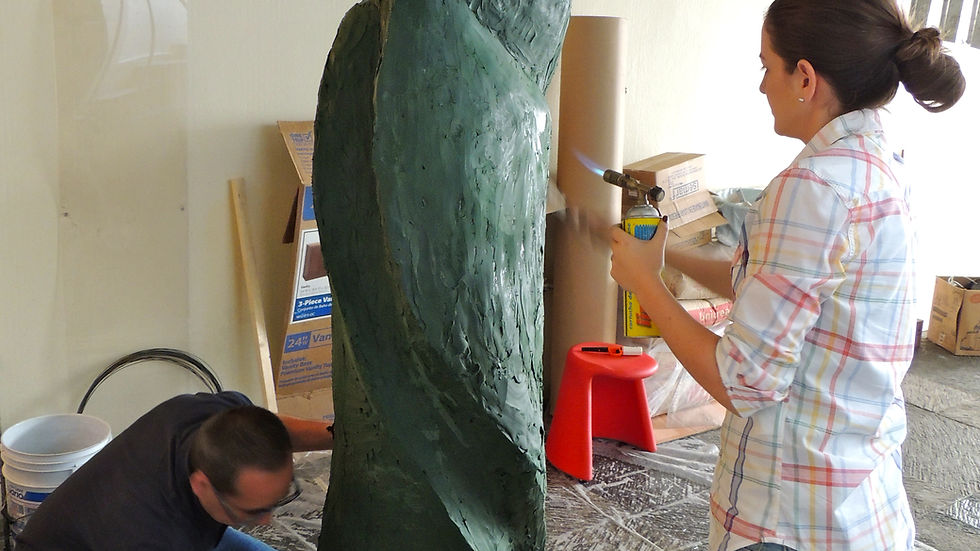
Once the concept is established, a three-dimensional model is sculpted in clay.
This stage allows the artist to refine proportions, gestures, textures, and emotional expression. Depending on the complexity of the work, this phase may take weeks or even months. For commissioned projects, clients typically review a small clay maquette before final approval.
The maquette serves as a preview of the finished sculpture and allows adjustments before production begins.
Step 3: Mold Making

After the sculpture is finalized, a mold is created around the original clay model.
The mold captures every detail, texture, and contour of the sculpture. This mold becomes the foundation for creating the wax replica that will be used during the casting process. Precision during this stage is fundamental because it’s more difficult to work directly in bronze.
Step 4: Creating the Wax Model

A hollow wax replica of the original sculpture is created using the mold.
The wax version is carefully inspected and refined by hand. Any imperfections are corrected before moving to the next stage. Additional wax channels, known as sprues and gates, are attached to create pathways for molten bronze to flow through the mold.
Step 5: The Lost-Wax Casting Process
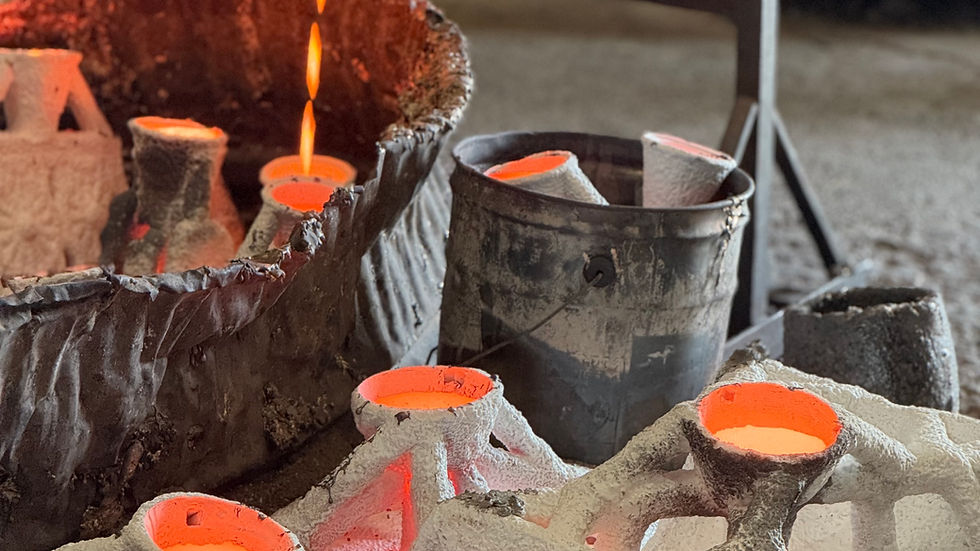
This is the stage that gives the process its name.
The wax sculpture is coated in multiple layers of ceramic material to create a durable shell. Once hardened, the shell is heated in a kiln. The wax melts and drains away, leaving behind a hollow cavity in the exact shape of the sculpture. This is known as the "lost-wax" process because the original wax model is permanently removed.
Molten bronze, heated to approximately 2,000°F (1,093°C), is then poured into the ceramic shell. After cooling, the shell is broken away to reveal the bronze casting. Large sculptures are typically cast in several pieces that are later put together in metal.
Step 6: Metal Finishing and Assembly

The newly cast bronze sculpture is only partially complete.
Metalworkers remove casting channels, weld separate sections together when necessary, and refine the surface. This stage requires both technical expertise and artistic sensitivity to preserve the integrity of the original sculpture. Every detail is carefully reviewed before moving to the finishing process.
Step 7: Patina and Surface Finishing

The color of a bronze sculpture is achieved through a process known as patination.
Using heat and carefully applied chemical solutions, a variety of rich surface tones can be created. These tones range from warm browns and golds to deep blacks and verdigris greens. Each patina is unique and contributes to the character and emotional presence of the finished work. Protective wax coatings are then applied to preserve the surface.
Step 8: Delivery and Installation

The final step is often the most rewarding.
Whether the sculpture is destined for a private collection, corporate environment, garden, institution, or public space, installation allows the artwork to begin its life in the world. At this point, months of design, craftsmanship, collaboration, and technical expertise come together in a single finished piece. This is where different professionals collaborate, including landscape artists, stone and granite fabricators, and lighting professionals.

Why Bronze?
Bronze has been used by artists for thousands of years because of its strength, beauty, and longevity. Unlike many materials, bronze can withstand generations of exposure while maintaining its structural integrity and artistic presence. For collectors and institutions, bronze offers a rare combination of permanence and expressive possibility.
Interested in Commissioning a Custom Bronze Sculpture?
Every commissioned sculpture begins with a conversation.
Whether you're envisioning a meaningful piece for your home, collection, garden, institution, or public space, I work closely with clients to transform ideas into lasting works of art. Learn more about the commission process, pricing, and timeline.



Comments